The Green Kitchen: Why This Is the Color That Finally Replaced White
On sage, forest, olive, and the quiet confidence of a kitchen that commits to color
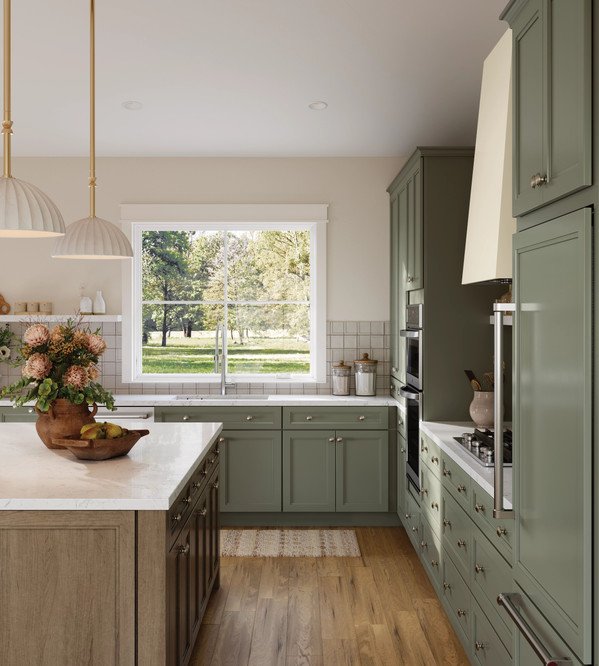
There's a moment, when you walk into a kitchen painted in the right shade of green, where something relaxes in you. It's not a dramatic room. It doesn't announce itself. It simply feels like somewhere you'd want to spend a Sunday morning.
That quality — calm, grounded, alive — is exactly why green has overtaken white as the most aspirational kitchen color. Searches for "sage green kitchen cabinets" are up over 400% year over year. "Forest green kitchen" and "olive green kitchen" aren't far behind. On Pinterest, green kitchens are among the most-saved home images of the year.
But not all green kitchens are created equal. Getting it right requires more care than choosing a color chip and hoping for the best.
The Spectrum of Green
Green is not one color — it's a vast territory, and where you land within it determines almost everything about how the kitchen will feel.
Sage. The most searched shade, and for good reason. True sage — a grey-green with low saturation — is one of the most forgiving colors in a kitchen. It reads as almost neutral in certain lights, then reveals its green character in others. It works in both modern and traditional kitchens, and pairs beautifully with warm wood, unlacquered brass, and white or cream walls.
Olive. Earthier and warmer than sage, olive leans toward the yellow side of the green spectrum. It's a deeply sophisticated choice that references the best of mid-century European kitchen design. Particularly beautiful against stone countertops and terracotta or encaustic tile.
Forest and deep greens. These are bolder commitments, and they reward that commitment. A deep racing green or hunter green kitchen — particularly on a lower run of cabinets or an island, paired with lighter uppers — is among the most striking rooms you can create. The key is restraint elsewhere: let the cabinets be the story.
Moody blue-greens. Teal, slate, and blue-leaning greens occupy a particular space in kitchen design right now. They're less obviously warm than sage or olive, but they carry a depth that makes smaller kitchens feel more considered rather than smaller.
The Case for Committing to Color
One of the conversations we have most often with homeowners considering a green kitchen is about confidence. They love the look, but they're nervous about living with it. What if they get tired of it?
Here's what experience shows: the kitchens people regret are almost never the bold ones. They're the ones where a homeowner talked themselves out of what they actually wanted and chose something safe instead. A sage green kitchen that was loved from the beginning is still loved a decade later. A greige kitchen that felt like a compromise from day one feels like one ten years on.
Color in a kitchen is also more durable than most people realize. The things that date a kitchen — the hardware style, the countertop material, the lighting fixtures — are all more changeable than the cabinet color. A well-chosen green can outlast multiple rounds of smaller updates and still look fresh.
Pairing Green Cabinets: What Works
The pairings that appear most consistently in the green kitchens that age best:
Countertops: Honed or leathered stone in warm whites, creams, or veined greys. Avoid anything too cool or too stark — polished bright white marble can fight with green rather than complement it. Unlacquered soapstone is one of the great pairings for darker greens.
Hardware: Unlacquered brass is the near-universal answer for sage and olive. It patinas over time in a way that deepens alongside the cabinet color. For darker greens, aged brass, blackened bronze, or even simple matte black all work well.
Flooring: Warm wood floors — white oak, walnut, reclaimed wide-plank — are the natural partner for green cabinets. They reinforce the organic, grounded quality of the color.
Walls: In a green kitchen, the walls should recede. Warm white, cream, plaster, or limewash all do this without fighting for attention.
Green in Beverly's Historic Homes
There's a reason green feels so right in the kind of homes that line Beverly's streets. Prairie-style bungalows and Victorians were designed by people who thought deeply about the relationship between interior and exterior, between the built environment and the natural world. Green in a kitchen is a continuation of that thinking — it draws the garden inside, connects the room to the mature oak and linden trees that shade Beverly's streets, and anchors the space in something that feels timeless.
We've worked with homeowners across Beverly, Morgan Park, and the South Side who were initially hesitant about green and became its most enthusiastic advocates within a few months of living with it. The key, as always, is getting the shade right — and understanding how your specific room's light will affect how it reads at different times of day.
Ready to Explore Green for Your Kitchen?
Beverly Cabinets carries lines across the spectrum of greens — from the softest sage to the deepest forest. We'll help you find the right shade, the right door profile, and the right pairing for your specific space.