Why White Oak Cabinets Are the Most Searched Kitchen Trend Right Now — and Why They Work So Well in Chicago Homes
On the quiet return of warm wood, and what it means for your kitchen remodel
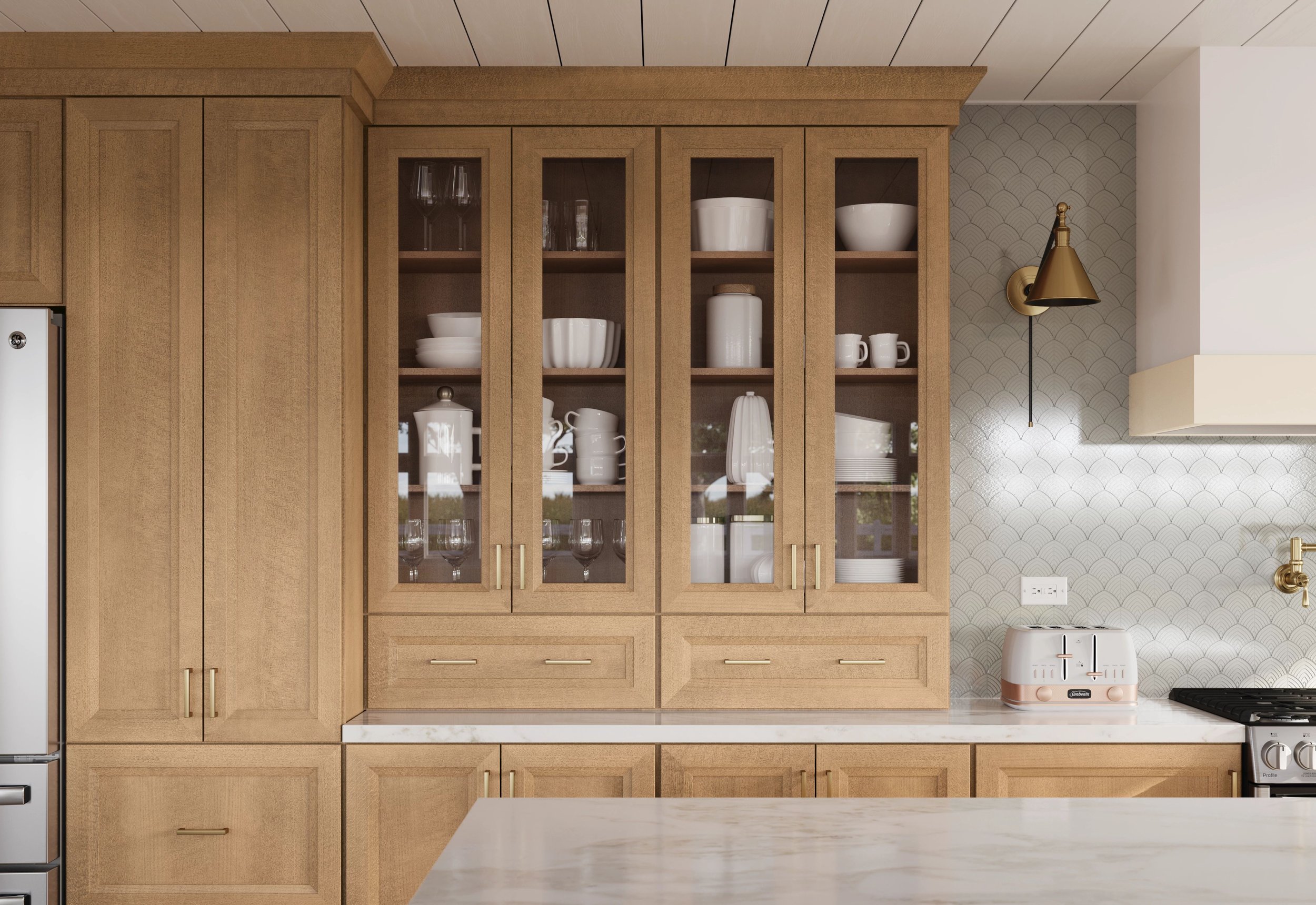
For the better part of a decade, the all-white kitchen was the default answer. White shaker cabinets, white marble countertops, white subway tile. Clean, bright, photographable — and increasingly, a little anonymous. A kitchen that could have been anywhere.
What's happening now is more interesting. Searches for "white oak kitchen cabinets" and "warm wood kitchen" have surged dramatically over the past year, and if you've spent any time on Pinterest or Houzz recently, you'll have noticed the shift. Wood is back. Not the honey-toned oak of the 1990s or the red-tinged cherry of the early 2000s — but something quieter and more considered. White oak. Rift-sawn white oak. White oak with a light wire-brushed finish that lets the grain breathe.
It's a trend with staying power, and if you're planning a kitchen remodel in the Beverly area or anywhere in Chicago, it's worth understanding why.
What Makes White Oak Different
White oak has a tighter, straighter grain than red oak, which gives it a more refined appearance. It takes stain and finish beautifully, but in its natural state — or with a very light treatment — it reads as warm without being heavy. It doesn't dominate a room. It grounds it.
The wood has a long history in American furniture and millwork, which means it sits naturally in the kinds of homes that line Beverly's streets. A white oak cabinet door in a 1920s bungalow kitchen doesn't look like a trend. It looks like it was always meant to be there.
What's changed is the way designers are pairing it. In the kitchens generating the most attention right now, white oak is appearing alongside:
Deep green or black island bases, creating a two-tone effect that adds depth without visual clutter
Honed Calacatta or leathered quartzite countertops rather than polished marble — quieter surfaces that let the wood read
Unlacquered brass or blackened steel hardware, both of which complement the warmth of the grain
Plaster or limewash walls that add texture rather than contrast
The effect is layered and tactile — the opposite of the flat brightness of the white-on-white kitchen.
How to Specify Wood Cabinets Well
The most common mistake with wood cabinetry isn't choosing the wrong species — it's choosing the wrong finish. A wood cabinet that has been over-stained or over-finished loses the very quality that makes it beautiful. You're left with something that looks like a facsimile of wood rather than the thing itself.
If you're working toward a white oak kitchen, here's what to look for:
Natural or barely-there finishes. The best white oak cabinetry is finished to protect the wood while preserving its character — a light oil, a matte lacquer, or a wire-brushed texture that enhances the grain without obscuring it.
Rift or quartersawn cuts. How the wood is cut affects how the grain appears on the face of the door. Rift-sawn white oak produces a straight, linear grain that is more contemporary and reads as more refined. Flat-sawn produces a more dramatic cathedral grain — beautiful in some applications, but more visually active.
Consistent grain matching. In a well-specified kitchen, the grain across cabinet doors is considered carefully. It doesn't need to be perfectly uniform, but it should feel intentional.
Thoughtful pairing with painted elements. Kitchens that mix wood uppers and painted lowers — or a painted island alongside wood perimeter cabinets — are among the most successful at achieving balance. The key is ensuring the paint color and the wood tone are in genuine conversation rather than competition.
White Oak in a Beverly or Chicago South Side Home
One of the things that makes white oak such a strong choice for homes in Beverly, Morgan Park, and the surrounding neighborhoods is its architectural compatibility. These are homes built with real wood — original trim, built-ins, hardwood floors — and a kitchen specified in white oak honors that material history rather than working against it.
It also ages exceptionally well. White oak, properly finished, develops a patina over years that makes it look better rather than tired. In a neighborhood where people tend to stay in their homes for decades, that kind of longevity matters.
At Beverly Cabinets, we carry lines that offer white oak in a range of door styles and finishes. Whether you're after a simple flat-panel door that lets the grain do the work, or a more traditional profile that bridges the gap between contemporary material and period architecture, we can help you find the right specification for your space.
A Note on Pairing Wood with Color
If you've been following kitchen design closely, you'll have noticed that warm wood is rarely appearing alone in the rooms that look most considered. It's paired with color — sage green islands, deep blue lowers, occasionally a black or graphite perimeter — in combinations that feel considered rather than accidental.
This is worth thinking about even if you're not ready to commit to a bold color. An island finished in a warm olive or a deep forest green alongside white oak uppers is not a statement — it's a composition. And compositions, unlike statements, tend to look better over time.
Beginning Your Kitchen Remodel
If you're in Beverly, Morgan Park, Mount Greenwood, or anywhere on Chicago's South Side and you're considering a kitchen remodel, we'd love to talk through what white oak — or any of the other lines we carry — might look like in your specific space.