The Kitchen Countertop Guide: What to Choose, What to Avoid, and What Actually Holds Up
A practical and honest look at the surfaces that take the most abuse in your homeWhat things actually cost, where to spend, where to save, and how to avoid the mistakes that blow budgets
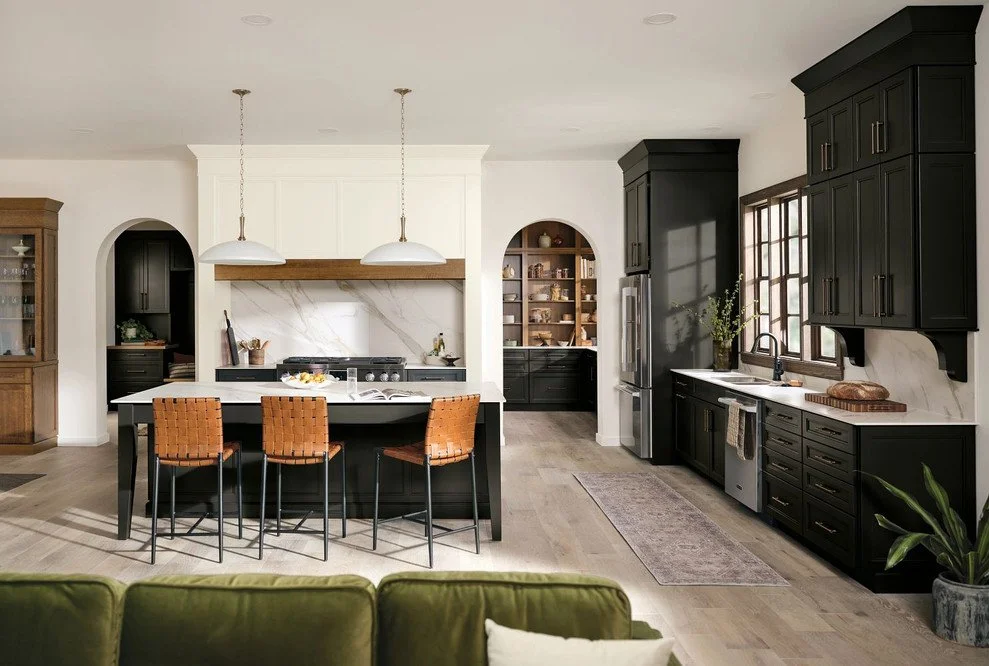
Countertops are the most talked-about surface in any kitchen remodel. They're also, arguably, the most consequential — they cover more visual real estate than any other single element, they're in contact with everything you cook, and they have to look as good at year ten as they did on installation day.
Ninety-one percent of homeowners upgrade their countertops during a kitchen renovation, according to recent Houzz data. That's nearly everyone. And yet the decision is often made on the basis of what looks most beautiful in a showroom slab, rather than what will actually perform in your specific kitchen and suit the way you actually cook.
Here's a more honest breakdown.
Quartz (Engineered Stone)
What it is: Engineered from ground quartz aggregate and resin, produced in consistent slabs with a uniform appearance.
The case for it: Non-porous, which means it never requires sealing and doesn't harbor bacteria. Highly consistent — if you need to match slabs across a large kitchen, quartz makes that easier than natural stone. Resistant to staining, etching, and most of the things that damage countertops.
The case against it: The uniformity that makes quartz practical is also what makes it less beautiful than natural stone. It lacks the movement, depth, and living quality of marble or quartzite. In kitchens with strong material character — white oak, handmade tile, aged brass — engineered stone can look flat by comparison. Also, some finishes show heat damage from hot pans more readily than natural stone.
Best for: Busy family kitchens where performance is the priority. Also a strong choice for secondary surfaces — a butler's pantry counter, a baking prep area — where durability matters more than beauty.
Marble
What it is: Natural stone, formed over millions of years, famously beautiful and famously demanding.
The case for it: There is nothing in a kitchen that looks like marble looks. The veining, the depth, the way it changes in different light. Calacatta, Carrara, Statuario — each quarry produces a slightly different stone with its own character. In the right kitchen, marble countertops are the difference between a beautiful room and a transcendent one.
The case against it: Marble is calcium carbonate, which means it is acid-sensitive. Lemon juice, wine, tomato sauce — all of these will etch the surface if left to sit. It also absorbs oil and stains readily without regular sealing. Over time, a marble countertop develops a patina that some homeowners love (it looks like use; it looks like history) and others find distressing.
Best for: Homeowners who understand the maintenance requirements and genuinely don't mind the patina. Also excellent in bathrooms, where it faces less acid exposure. Not recommended as a primary surface in high-use family kitchens where it will be stressed regularly.
Quartzite
What it is: Natural stone, metamorphic in origin, often confused with quartz (engineered) but entirely different. Some of the most beautiful stones on the market — White Macaubus, Mont Blanc, Sea Pearl — are quartzites.
The case for it: Much harder and more acid-resistant than marble. Develops a similar natural beauty — veining, movement, depth — without the same sensitivity. Calacatta Viola, one of the most-searched stones of the year, is technically a quartzite. Requires sealing but is significantly less demanding than marble in daily use.
The case against it: Quality varies considerably by quarry and specific stone. Some quartzites sold as such are actually softer marbles — it's worth asking for a scratch test before committing. Good quartzite slabs are expensive.
Best for: Homeowners who want the look of marble with better real-world performance. One of the best overall choices for a primary kitchen surface.
Soapstone
What it is: A natural stone with a distinctively soft, matte, slightly gray-green surface. Used in laboratory countertops and, historically, in American kitchen sinks.
The case for it: Non-porous without sealing — the only natural stone that is. Doesn't etch from acids. Ages beautifully, developing a dark patina over time. In a historic home or a kitchen with a craft or utility-room character, it's an extraordinary material. Particularly beautiful with dark or deep-colored cabinetry.
The case against it: Can scratch and dent, though these marks typically blend into the overall patina. Limited color range — it's grey-green, and that's essentially it. Aesthetically specific; not for every kitchen.
Best for: Historic homes, dark kitchens, homeowners who genuinely want a surface that looks better with use.
Butcher Block
What it is: End-grain or edge-grain wood countertops, typically in maple, walnut, or white oak.
The case for it: Warm, tactile, naturally repair-able — scratches and marks can be sanded out and re-oiled. Beautiful alongside painted cabinetry. In a kitchen with a more utility or farmhouse character, butcher block is the natural answer.
The case against it: Requires regular oiling. Can warp if water is allowed to pool. Not appropriate as a primary surface in a high-moisture area near the sink without careful detailing.
Best for: Islands, secondary prep surfaces, baking counters. Also works as a full primary surface in the right kitchen, particularly in smaller spaces where the warmth of wood is an asset.
A Note on Backsplash
The countertop and the backsplash are a composition, not two independent decisions. The material, scale, and color of the tile or stone behind your cabinets should be decided in relation to the countertop surface — not after it's been installed.
Beverly Cabinets works alongside homeowners across Chicago's South Side to help navigate these decisions in context — with their actual cabinet finishes, their actual light conditions, and their actual way of cooking in mind.